DNA Structure questions :
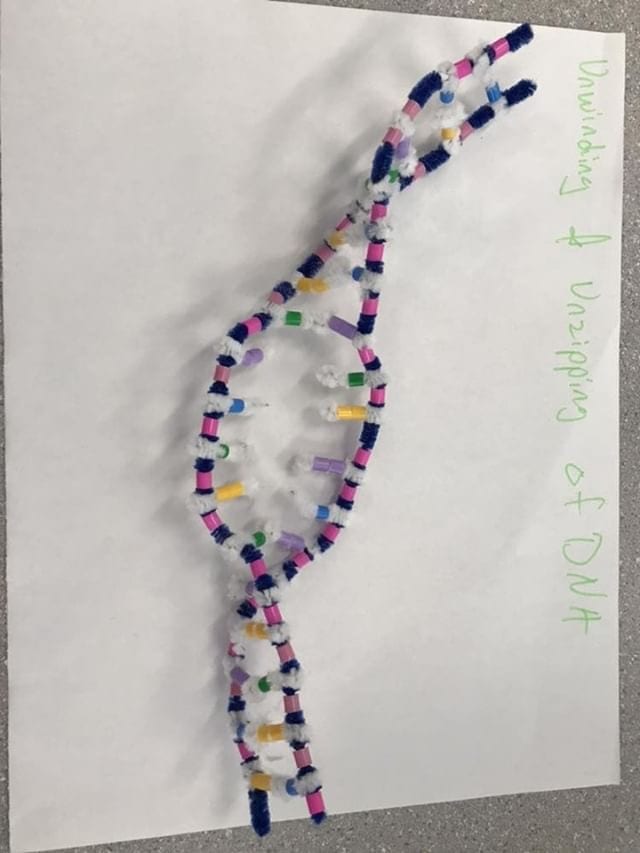
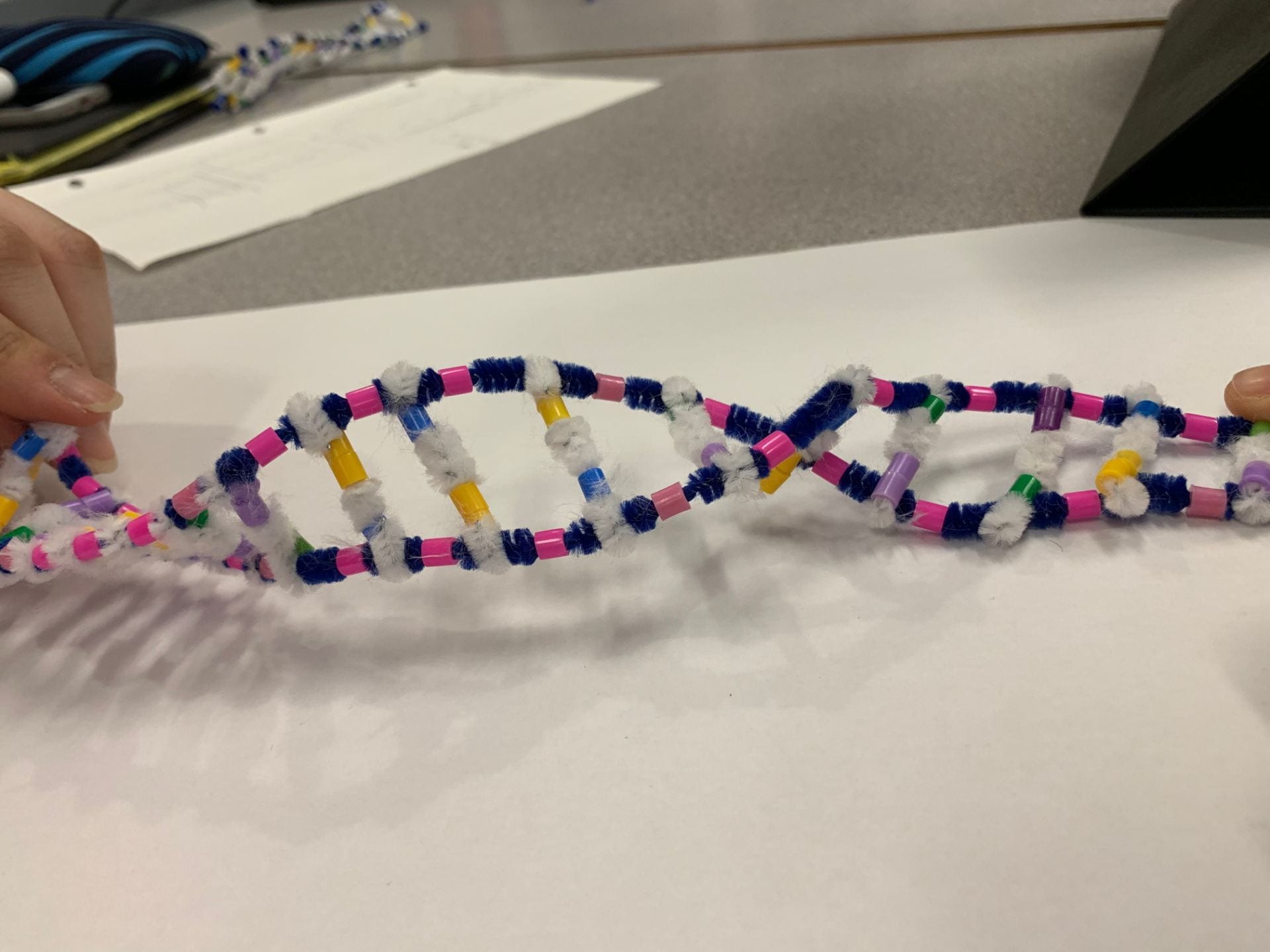
- DNA is made out of deoxyribose, phosphates and nitrogenous bases. DNA is a large polymer made out of nucleotide monomers and has 2 backbones.The structure of DNA consists of Two strands that intertwine to form a double helix and are anti-parallel.Meaning they are read in the opposite directions. If the first strand is read in the 3′ to 5′ direction that means the second strand will be read in the 5′ to 3′ direction. The Nucleotides ( A, C , G ,T) join up and form hydrogen bonds between their complementary bases. Bonds with T , and C bonds with G , This is called complementary base pairing.
2. This activity helps model the DNA structure clearly because it gives us a better visual of the double helix structure. The fact that we are creating a 3D model allows us to better observe the complementary base pairing and better understand the concept behind the anti-parallel strands. The color-coded beads that symbolized nitrogen bases help us further our understanding of the purine/pyrimidine bases. Since the purine bases were always shown by 2 beads rather than 1. A possible change that can be implemented to improve this project would be to improve the modeling of the anti-parallel strands. instead of beads that may slip off or move out of place, we could use a white pipe cleaner and color the sides to represent a sugar or phosphate instead of using beads.


DNA REPLICATION:
- DNA replication occurs before a cell divides to ensure all the cell’s genetic information is copied before it can proceed to divide.
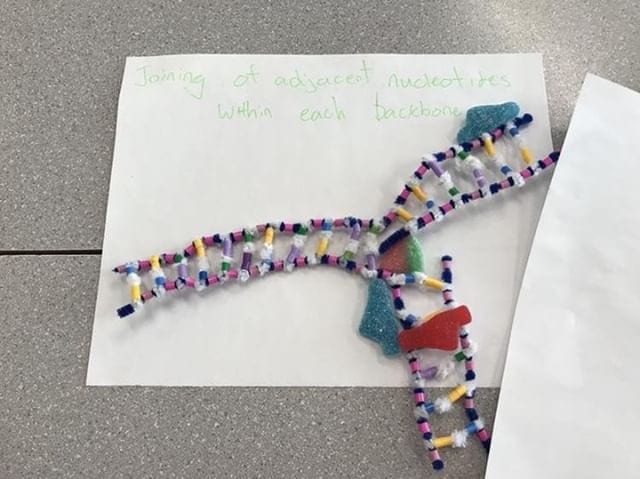
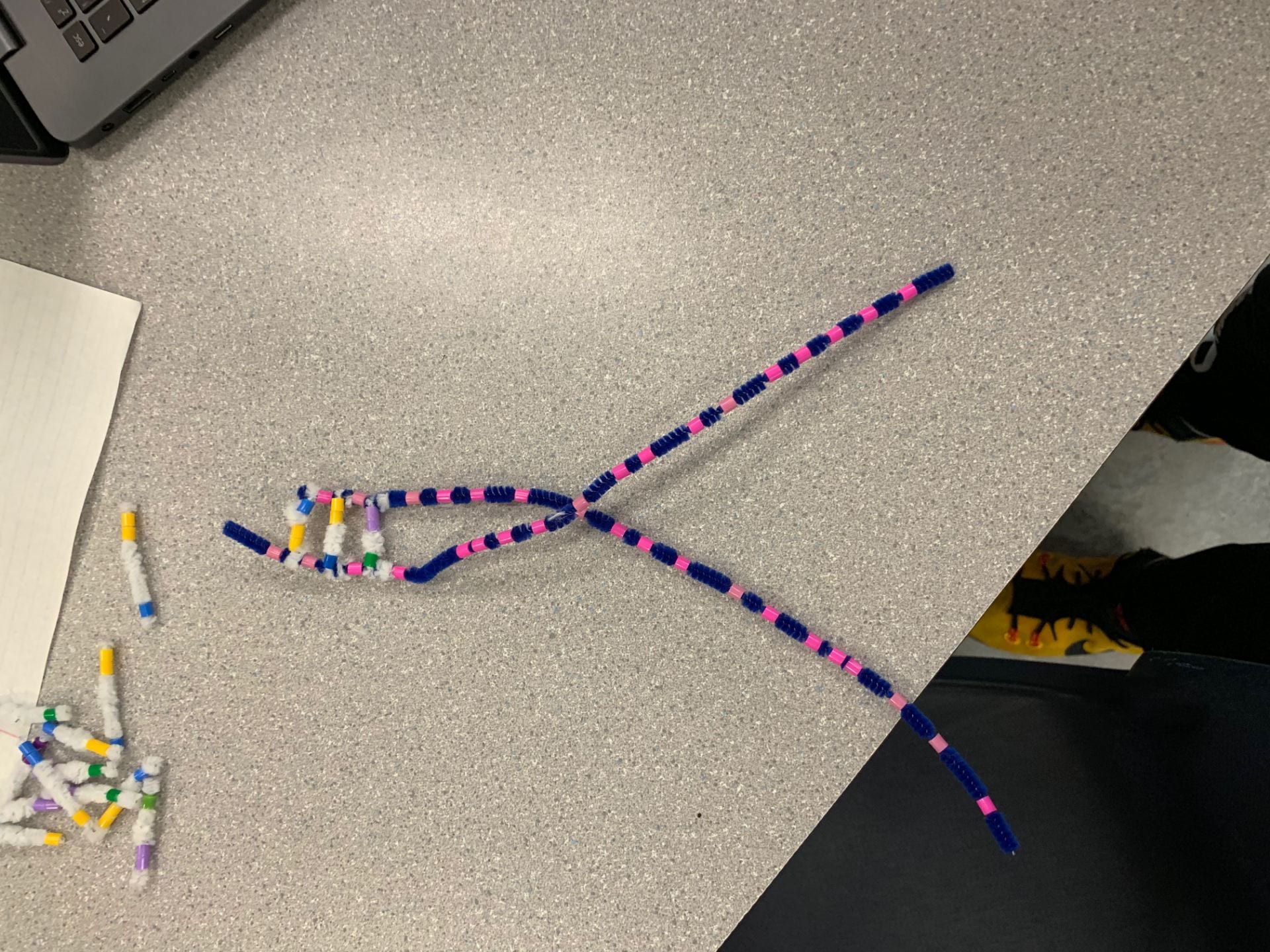
2. The first step in DNA replication is the unwinding of the double helix. DNA Helicase is responsible for the unwinding of the strand that leaves the nitrogen bases exposed and breaks the hydrogen bonds between them. The second step is Complementary Base pairing, in which the nucleotides move into place and form H – bonds with their partner nucleotides on the strand. This process is done by DNA polymerase. The third and final step is the joining of adjacent nucleotides by forming sugar-phosphate bonds between them. The leading strand is continuous as the DNA unzips. Meanwhile, the lagging strand forms fragments as the DNA continues to unzip. DNA ligase proceeds to glue any of the fragments that are present. The reason why the process is different for the lagging strand is because of the fragments that form because it is read much slower than the leading strand.
3. For the complementary base pairing, we used candy to model the DNA polymerase, similarly with the Joining of adjacent nucleotides we also used candy to model the DNA Ligase.