Community Connection – Cole Burdett

Community Connection

For my community connections post I chose to interview biologist/Research manager for a lab out of UBC Kate Del Bel. I decided to do my interview with her because I spent a lot of my time in BC children’s hospital, because I was diagnosed with crohn’s disease when I was in the 6th grade, alongside a few other things. So when I was there, I had to get all kinds of X-rays, MRI’s, colonoscopies, and IV’s. And I still do this just to this day. Also, when I am older I would really like to work in the field of science/medicine because it seems really interesting, and it has some good benefits.

Who is Kate?

Kate Del Bel is some (like I said previously) who works out of a lab in UBC who also studies pediatric immunology (like rare diseases in kids). She used to be a biologist, but now she just manages others. Before she would go into BC children’s hospital a lot more, but now she works from home mostly. (In this picture it’s meant to say UBC not IBC)

The Interview

The interview was over a facetime call, but we also communicated through IMessage’s previously. But I got all of my information primarily through the FaceTime. The answers are also not her exact words, but just the notes I took during our call.

Question 1: Can you explain your roles and responsibilities with your current position? 

Her answer: I am a manager at a research lab out of UBC. I righting grands, I hire and fire people, and I come up with new ideas.

Question 2: What obstacles have you faced to get you where you are today? 

Her answer: I had to get a Bachelor of Science, and a masters, if you want to get any kind of job like this you really need it. I also had to find a lab capable of getting money. (as bad as that sounds she says).

Question 3: What advice would you pass on to someone interested in what you are doing? 

Her answer: You need a bachelors for sure. You needed time working in a lab before. You had to have done some stuff like this in the past (previous experience in this field) Have experience with different kinds of sciences.

Question 4: Why are you passionate about your job or role? 

Her answer: She loves working with doctors at hospitals, and finding patients with rare or unknown diseases. Then trying to identify/cure the disease. She said that that can be really life changing for someone.

Question 5 (my question): “Has the pandemic changed your role in what you do? If so, how?”

Her answer: Yes. Before I worked in a lab. But during the pandemic, I worked at home. I would go in 1 day a week to the lab. 1 benefit of that is that there is less driving, and that saves a lot of time.

Question 6 (my second question): what is the best part of your job?”

Her answer: Like I said before, when you have patients that you’ve been able to treat their diseases, and knowing that you just changed someone’s life so drastically for the better. That is the best feeling is knowing you did something good.

What I learned from the call

Before going into this I didn’t know too much about doing anything science/medicine related, other than that you would have to go into university, then med school if you were thinking about medicine. But, now I know that if I were to go into the field that Kate is currently in, I would need a Bachelor’s and a Master’s.

Another piece of advice she gave me is that it’s better to go into kids medicine rather than adults, because lot’s of the time kids are easier to deal with that adults, and sometimes adults can be “big babies”. Which is a helpful piece of advice if I were to pursue my dreams of becoming a doctor.

After talking to her, I only wanted to go into medicine more. I really feel like I can make it as a doctor.

In the end of this project, I actually learned a lot more useful information than I thought I would. I learned about what you might need to get a job like this, and I learned what the best, and worst parts of having a job like this might be like.

Thank you so much to Kate. You were really easy to work with, and you gave me some good insight as to what having a job like this would be like.

Some links to some of Kates work:

Our Team | BC Children’s Hospital Research Institute (bcchr.ca)

Kate DEL BEL | University of British Columbia – Vancouver, Vancouver | UBC | Department of Pediatrics | Research profile (researchgate.net)

Digital Footprint

My Digital Footprint

Intro: Almost everyone in the modern day and age have a digital footprint, and understanding how to keep it clean is very important. So in this blog I’ll be sharing about my digital footprint and how to keep it clean.

Free Turned-on Computer Monitor Displaying Text Stock Photo


Questions:

Q1: What strategies could you use to
protect your own identity when
using social media?

A1: Some of the most simple strategies that you could use to protect your digital footprint are;  1. Being careful about what you post. If you don’t post anything dumb, or inappropriate that’s one of the most simple ways that you can clean up your name online. 2. Don’t say any of your personal information online. i.e. your address, what school you go to, your banking details etc. And 3. have super secure passwords. One way that you can have safe passwords is to not use the same passwords on different websites, because if someone finds out that password from 1 site, they have it for every site.

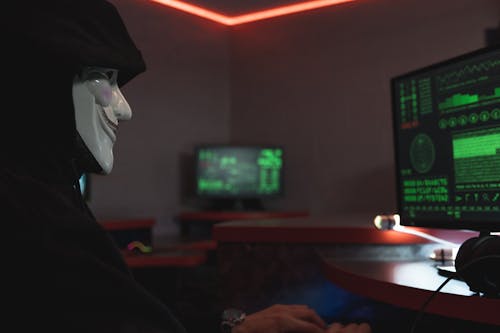
Free A Person with Mask Using a Computer Stock Photo

Q2: What are some ways you can
limit the amount of online
content that you are constantly
consuming?

A2: The simplest way (and probably the best way) that you can limit your time spent online is to take a break every once in a while, and do something outside of your screen, like go on a bike ride, or something else outside. Another thing that you can do to limit your time spent on your phone specifically, is that through the screen time app you can set a daily screen time limit. I’ve never done this one personally, but I’ve seen people who have a screen time limit. And my favorite way to avoid the amount of online content that you consume each day is to not watch any kind of short form content (like Tik Tok, YouTube Shorts, Snapchat Highlights etc.) . It always been easy for me to avoid these kind of videos, but it’s so easy to scroll through these videos for hours, and some people really struggle to break the habit.

Free Foggy Lake Stock Photo

Q3: Describe at least 3 strategies that
you can use to keep your digital
footprint appropriate and safe.

A3: My 3 best ways that you can keep your digital footprint safe are:

  1. Never post anything inappropriate/hurtful online. Something hurtful being anything racist, sexist, homophobic, etc. If you aren’t sure if something is one of those 2 things, just don’t post it, because it probably didn’t even have to be said in the first place.
  2. Try to use your social media for productive things only. Make your personal social presence something that could be shown to a future employer, and you wouldn’t be ashamed, or worried about. You should never post things that will come back to haunt you in your later years.
  3. Don’t post too much. I see things posted online a lot that are just pointless, and that no one had so say. They’re not actively bad, but no one appreciates a person who has to post something all the time, and is needy for likes.

Free Photo of a Man Listening Music on his Phone Stock Photo


Reflection after googling myself: 

It’s really hard to find myself online. If you just look up my full legal name I couldn’t find anything about myself other then my school e-mail account. Then I tried looking up some of my online usernames, and found 1 thing… My profile picture. It’s the same one I have on my school account right now, so it’s not really special. But 1 strange way that I did find myself is through the friends list of someone I have friended on steam. I couldn’t really find me anywhere else though. My personal e-mail doesn’t have my full name in it, and I don’t really have any social media. Overall my digital footprint is clean. My digital footprint would come across as good to others I think, since by me not having a lot of social media presence, and the only YouTube channel that would show up belongs to my little brother, that show’s that I don’t post a lot of dumb things on social media, and I don’t feel the need to constantly say things.

Free Water Drop Stock Photo


Conclusion:

After completing this activity I learned a lot of things about me, my online presence, and the internet. I learned that it’s pretty hard to find myself online and that I have a pretty common name for people in the U.S.A. And that my last name/other last names that are extremally similar, seem to be much more common then I thought originally. I learned that it’s possible to find out about any of my accounts for any app just from google. And I learned just how easy it is to find out about normal people that you would otherwise know nothing about through the internet. Overall this project was a great way to find out more about myself through the internet.

Free Low angle of successful female executive manager in classy style sitting at table with laptop in contemporary workplace and passing documents to colleague Stock Photo


Bibliography (in order of appearance):

Photo by Pixabay from Pexels: https://www.pexels.com/photo/turned-on-computer-monitor-displaying-text-270360/

Photo by Tima Miroshnichenko from Pexels: https://www.pexels.com/photo/a-person-with-mask-using-a-computer-5380608/

Photo by Quang Nguyen Vinh from Pexels: https://www.pexels.com/photo/foggy-lake-2166695/

Photo by Andrea Piacquadio from Pexels: https://www.pexels.com/photo/photo-of-a-man-listening-music-on-his-phone-846741/

Photo by Pixabay from Pexels: https://www.pexels.com/photo/water-drop-220211/

Photo by Andrea Piacquadio from Pexels: https://www.pexels.com/photo/positive-businesswoman-doing-paperwork-in-office-3756678/