AgustinaP.'s Site

My Riverside Rapid Digital Portfolio

Category: Grade 11 (Page 1 of 3)

Week 17-PC11- Trigonometry- Law of Sines, Possible Triangles, and Ambiguous Case

Mistake of the week-17

Math Vocabulary:

Quadrants– The four sections that are created when there is an x and y axes plane.

https://courses.lumenlearning.com/aacc-collegealgebrafoundations/chapter/read-quadrants-on-the-coordinate-plane/

Standard Position (Initial arm)– The initial arm is where we start from, in this case our initial arm will always be the x-axis between quadrant 1 and quadrant 4.

https://www.expii.com/t/standard-position-of-an-angle-5217

Terminal arm (terminal side)- Where we end, it can be in any quadrant.

Rotation Angle– Amount of rotation (angle) between the initial arm and terminal arm.

Reference Angle– The reference angle can be in all four quadrants, it is the angle formed by the terminal side, always from the horizontal (x-axis). Always less or equal to 90°.

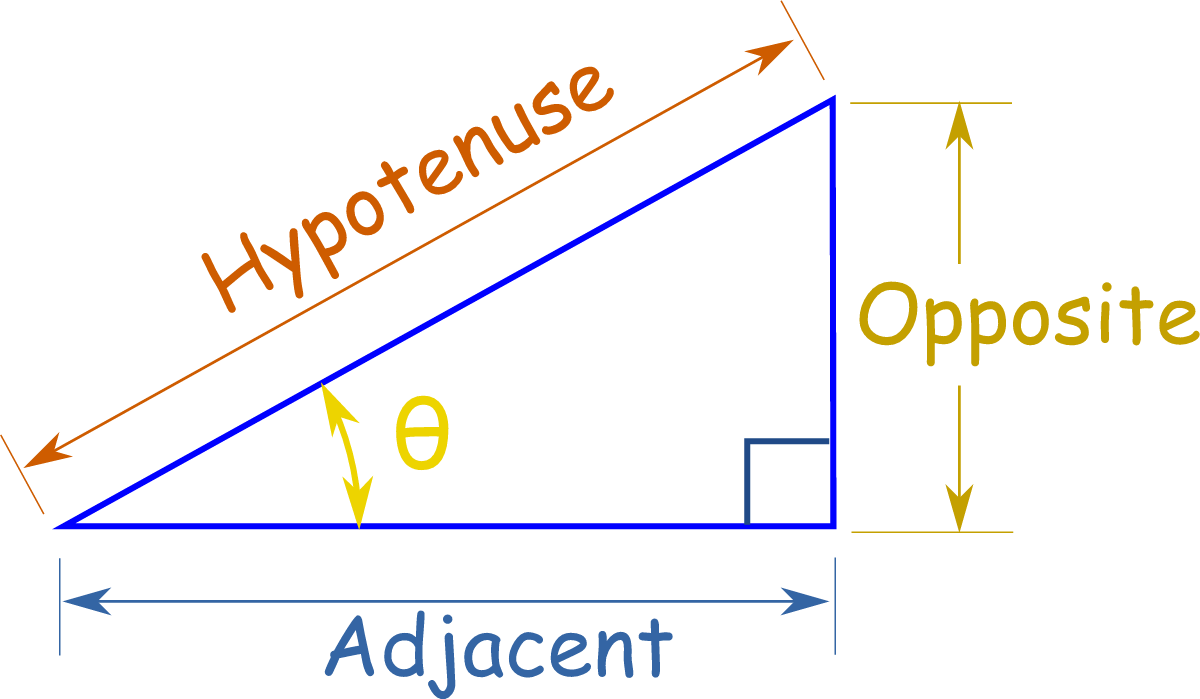
Ratios– Ratios used to find missing sides or angles of a triangle. The three ratios are sine, cosine, and tangent.

Hypotenuse- Longest side of the triangle, always across the 90°.

Adjacent- This depends on where the reference angle is located, but it is always in the side that is right besides it.

Opposite- This depends on where the reference angle is located but it is always opposite to it.

https://www.mathsisfun.com/algebra/trig-finding-side-right-triangle.html

Special Right Triangles- These are triangles that are very common and their ratios are always the same. When we encounter one of these triangles, a calculator is not needed because the values never change.

https://www.khanacademy.org/math/geometry/hs-geo-trig/hs-geo-special-right-triangles/a/special-right-triangles-review

Ambiguous Case- Triangles can be located in different quadrants, however, it is really difficult to determine this unless we draw and solve the triangle. Ambiguous means that is really difficult.

Sine Law- This is a very common law used when you do not have a right triangle.  \frac{{\sin A}}{a} = \frac{{\sin B}}{b} = \frac{{\sin C}}{c}

Cosine Law– This is used when you do not have enough information to use the Sine Law. a^2 = b^2 + c^2 - 2bc\cos A


Best mistake of the week:

Practice sheet, Law of Sines Ambiguous Case, number 3:

My mistake:

It is not really a mistake but I did not understand why it was giving me an error when I first tried to solve it.

Why is this important? 

It is important to know what the reasons for the calculator giving you an error might be. It might be because the formula was written incorrectly or like in this case, the problem had no solution at all. To prevent this it is important to remember the basic rules of the problem you are solving.

What I did:

Here is how I drew the triangle and plugged the formula into my calculator.

Solution:

This is why the formula I was using never worked.

There are zero triangles, this triangle is not real nor possible.

The solution is correct.

Week 16-PC11- Trigonometry- Reference and rotational angles

Mistake of the week-16

Math Vocabulary:

Quadrants– The four sections that are created when there is an x and y axes plane.

https://courses.lumenlearning.com/aacc-collegealgebrafoundations/chapter/read-quadrants-on-the-coordinate-plane/

Standard Position (Initial arm)– The initial arm is where we start from, in this case our initial arm will always be the x-axis between quadrant 1 and quadrant 4.

https://www.expii.com/t/standard-position-of-an-angle-5217

Terminal arm (terminal side)- Where we end, it can be in any quadrant.

Rotation Angle– Amount of rotation (angle) between the initial arm and terminal arm.

Reference Angle– The reference angle can be in all four quadrants, it is the angle formed by the terminal side, always from the horizontal (x-axis). Always less or equal to 90°.

Ratios– Ratios used to find missing sides or angles of a triangle. The three ratios are sine, cosine, and tangent.

Hypotenuse- Longest side of the triangle, always across the 90°.

Adjacent- This depends on where the reference angle is located, but it is always in the side that is right besides it.

Opposite- This depends on where the reference angle is located but it is always opposite to it.

https://www.mathsisfun.com/algebra/trig-finding-side-right-triangle.html

Special Right Triangles- These are triangles that are very common and their ratios are always the same. When we encounter one of these triangles, a calculator is not needed because the values never change.

https://www.khanacademy.org/math/geometry/hs-geo-trig/hs-geo-special-right-triangles/a/special-right-triangles-review

Best mistake of the week:

Skill check trigonometry #1, number 6b:


My mistake:

The equations we are working with are to find the rotational angle, however, I thought we were finding the reference angle because the first and the third question had rotational angles in quadrant 1. For this reason, both of my answers for one question were wrong.

Why is this important? 

We always need to know what we are looking for when we do a math problem. If you do not know what you are looking for then you probably will not know what formula to use.

What I did:

I did get the right answer at first, however, because I thought we were looking for reference angles I stopped looking for the second value.

Solution:

The equation gives me the first rotational angle, in this case, I have to look for the reference angle because the rotational angle it gave me was in quadrant 3.

The solution is correct.

Week 15-PC11- Trigonometry-Angles

Mistake of the week-15

Math Vocabulary:

Quadrants– The four sections that are created when there is an x and y axes plane.

Quadrants on the Coordinate Plane | College Algebra Foundations

https://courses.lumenlearning.com/aacc-collegealgebrafoundations/chapter/read-quadrants-on-the-coordinate-plane/

Standard Position (Initial arm)– The initial arm is where we start from, in this case our initial arm will always be the x-axis between quadrant 1 and quadrant 4.

Standard Position of an Angle - Expii

https://www.expii.com/t/standard-position-of-an-angle-5217

Terminal arm (terminal side)- Where we end, it can be in any quadrant.

Rotation Angle– Amount of rotation (angle) between the initial arm and terminal arm.

Reference Angle– The reference angle can be in all four quadrants, it is the angle formed by the terminal side, always from the horizontal (x-axis). Always less or equal to 90°.

Ratios– Ratios used to find missing sides or angles of a triangle. The three ratios are sine, cosine, and tangent.

Hypotenuse- Longest side of the triangle, always across the 90°.

Adjacent- This depends on where the reference angle is located, but it is always in the side that is right besides it.

Opposite- This depends on where the reference angle is located but it is always opposite to it.

Finding a Side in a Right-Angled Triangle

Reference angle is at the left corner.

https://www.mathsisfun.com/algebra/trig-finding-side-right-triangle.html

Best mistake of the week:

Workbook Page 163, number 3a:

State the reference angle and sketch the rotational angle:

My mistake:

The reference angle will always be close to the x-axis, a common error is to find it by using the y-axis, which is what i did. Because I found the one close to the y-axis, my answer was wrong.

Why is this important? 

It is a rule that I have to remember every time I solve one of these problems. it is difficult to see if the answer is wrong because you don’t really know what the angle is. Therefore, we have to be very careful when solving one of these during a test.

What I did:


Solution:

The solution is correct.

Week 14-PC11- Rational Expressions and Word Problems

Mistake of the week-14

Math Vocabulary:

Coefficient– Number that represents a constant value, usually multiplies the expression.

Factorize/ factor/ factoring– In math factoring or to factor is to find the smallest numbers that multiplied together will give you the original number. This is used so you can work with simpler and smaller numbers.

Ex: 250= 25 x 10, you can still make those numbers smaller, 25= 5 x 5 and 10 = 2 x 5.

Therefore it will end up being 250 = 5 x 5 x 2 x 5.

Quadratic Function– A function in which the equation’s highest exponent is 2.

Isolate– Leave variable by itself.

Simplify– Write something in its most basic/simple form.

Denominator– The bottom number in a fraction.

Nominator– The upper part in a fraction.

Rational Equations- An equation that is displayed as a fraction,


Best mistake of the week:

Workbook Page 409, number 2:

My mistake:

I do not like word problems, and using equations and expressions to describe them is even more difficult. For this problem, it was easier to write the expressions but there was a part in which I needed to add or subtract 12 hours from the time the train or the airplane took to complete the 2000 km. Because i did that part wrong, the answer I got was negative but that showed me that my work had an error somewhere in the expressions.

Why is this important? 

If you cannot write word problems accordingly to the text, it might be really difficult to analyze it and get the right answer on a test, even more important to know for the finals or a midterm.

What I did:

The organization of my DST (Distance, Speed, and Time) table was right. However when I was adding the 12 hours, I added them to the wrong expression, and the answer I got was negative.

Solution:

If we do a quick graph we can see which expression should get the extra twelve hours. in this case, because the train takes more hours than the airplane, we need to add the hours to the airplane so the time is the same.

The solution is correct.

Week 13-PC11- Adding and Subtracting Rational Equations

Mistake of the week-13

Math Vocabulary:

Coefficient– Number that represents a constant value, usually multiplies the expression.

Factorize/ factor/ factoring– In math factoring or to factor is to find the smallest numbers that multiplied together will give you the original number. This is used so you can work with simpler and smaller numbers.

Ex: 250= 25 x 10, you can still make those numbers smaller, 25= 5 x 5 and 10 = 2 x 5.

Therefore it will end up being 250 = 5 x 5 x 2 x 5.

Quadratic Function– A function in which the equation’s highest exponent is 2.

Isolate– Leave variable by itself.

Simplify– Write something in its most basic/simple form.

Denominator– The bottom number in a fraction.

Nominator– The upper part in a fraction.

Rational Equations- An equation that is displayed as a fraction,


Best mistake of the week:

Workbook Page 374, number 5a:

My mistake:

I thought that I could not cancel the nominator with the denominator because I had to find a common denominator first. Turns out it was possible and it is actually really necessary because it allows us to have fewer numbers and it makes it easier to simplify.

Why is this important? 

Even though factorizing is the first step, if you do not stop and think the best way to solve it, you will end up wasting time and with a high probability of getting it wrong.

What I did:

I multiplied each numerator by the opposite denominator, because of this i had a really big number and I did not have the right answer.

Solution:


Restrictions are very important, remember to always add them when there is a variable in the denominator.

The solution is correct.

Week 12-PC11- Rational Equations and Expressions

Mistake of the week-12

Math Vocabulary:

Coefficient– Number that represents a constant value, usually multiplies the expression.

Factorize/ factor/ factoring– In math factoring or to factor is to find the smallest numbers that multiplied together will give you the original number. This is used so you can work with simpler and smaller numbers.

Ex: 250= 25 x 10, you can still make those numbers smaller, 25= 5 x 5 and 10 = 2 x 5.

Therefore it will end up being 250 = 5 x 5 x 2 x 5.

Quadratic Function– A function in which the equation’s highest exponent is 2.

Isolate– Leave variable by itself.

Simplify– Write something in its most basic/simple form.

Denominator– The bottom number in a fraction.

Nominator– The upper part in a fraction.


Best mistake of the week:

Workbook Page 356, number 3c:

My mistake:

To simplify a rational equation or expression, it needs to be factorized first so we can take the common numbers in the denominator and nominator out. For this problem, I did not factorize it properly, and the answer I got was not right.

Why is this important? 

Factorizing is the first step, if you do not do it right, your whole answer might be wrong.

What I did:

I couldn’t figure out how to simplify both parts properly, the upper factorization was right, but the bottom part was not. I used the grouping method and it was not working, so I knew that I had done something wrong. Turns out I took out the negative so it changed my whole answer.

Solution:

Remember to add the restrictions when there is a variable on the denominator.

The solution is correct.

Week 11-PC11- Quadratic Functions -Inequalities in graphs-

Mistake of the week-11

Math Vocabulary:

Coefficient– Number that represents a constant value, usually multiplies the expression.

Factorize/ factor/ factoring– In math factoring or to factor is to find the smallest numbers that multiplied together will give you the original number. This is used so you can work with simpler and smaller numbers.

Ex: 250= 25 x 10, you can still make those numbers smaller, 25= 5 x 5 and 10 = 2 x 5.

Therefore it will end up being 250 = 5 x 5 x 2 x 5.

Quadratic Function– A function in which the equation’s highest exponent is 2.

Parent Function– The parent function for quadratic equations is y=x^2. A parent function is the simplest function that follows a certain set of rules.

Ex: “Quadratic functions have a variable with a maximum exponent of 2”

The simplest function that still follows this rule is y= x^2.

Vertical Translation– When the parent function is changed, the graph will move from its original position. If the graph was moved up or down, it means that it translated vertically.

Horizontal Translation– If the parent function is changed and the grah moved to the right or to the left from its original position, then it means it translated horizontally.

Stretch– This is a coefficient at the beginning of the equation. It determines how wider or narrow the graph will be compared to the parent function. The parent function has an invisible coefficient of 1.

Reflection– When the graph is going down instead of up, it is called a reflection in the x-axis.

Axis– A line used as reference point, in a graph the line that goes from top to bottom is the “y-axis,” and the one across is the “x-axis.”

Coordinates– A set of values that show an exact position, a point in a graph.

Parabola– It is the proper name for the graph of a quadratic equation.

Vertex– The most important part of a graph, is where your graph starts.

Inequalities– A statement that identifies if two things are equal to each other, greater, or smaller than the other. Symbols used: less than <, greater than >, less or equal than , less or equal than , not equal to and equal to =.


Best mistake of the week:

Workbook Page 437, number 1c:

My mistake:

Inequalities are easy, however, when we need to solve them from a graph it was more confusing than I thought it would be. Finding the x-intercepts was really easy but when it was time to write the solutions for greater and less than zero, it was more challenging.

Why is this important? 

If the symbols in an inequality are not written properly, the answer will not make sense. For example, if the solution you write is x>-2 and x>2; the answer will not be correct because it would show a number-line like this one:

It would mean that even if you say x=1, it would only be true for one of the values for x. This is the main reason of why my initial answer was wrong, you should not have both variables have the same inequality symbol (= might be one of the exceptions but only when they are asking for the solution to be =0).

What I did:

I could not understand how to analyze the graph to get the right answer.

For c), I got the answer x<-5 and x<7.

My error was mostly a sign error, something larger than -5 would be -4, -3, -2, -1, 0, etc. Therefore, it would be to the right of the number line. However, I thought it was to the left because I did not understand the graph fully.

Solution:

After I analyzed the graph, the answer was clearer. I was able to understand how the symbols were supposed to be written and which side of the graph I had to focus on.

It will be easier to understand graphs from now on.

The solution is correct.


Week 10-PC11- Quadratic Functions -Stretch in Graphs-

Mistake of the week-10

Math Vocabulary:

Coefficient– Number that represents a constant value, usually multiplies the expression.

Factorize/ factor/ factoring– In math factoring or to factor is to find the smallest numbers that multiplied together will give you the original number. This is used so you can work with simpler and smaller numbers.

Ex: 250= 25 x 10, you can still make those numbers smaller, 25= 5 x 5 and 10 = 2 x 5.

Therefore it will end up being 250 = 5 x 5 x 2 x 5.

Quadratic Function– A function in which the equation’s highest exponent is 2.

Parent Function– The parent function for quadratic equations is y=x^2. A parent function is the simplest function that follows a certain set of rules.

Ex: “Quadratic functions have a variable with a maximum exponent of 2”

The simplest function that still follows this rule is y= x^2.

Vertical Translation– When the parent function is changed, the graph will move from its original position. If the graph was moved up or down, it means that it translated vertically.

Horizontal Translation– If the parent function is changed and the grah moved to the right or to the left from its original position, then it means it translated horizontally.

Stretch– This is a coefficient at the beginning of the equation. It determines how wider or narrow the graph will be compared to the parent function. The parent function has an invisible coefficient of 1.

Reflection– When the graph is going down instead of up, it is called a reflection in the x-axis.

Axis– A line used as reference point, in a graph the line that goes from top to bottom is the “y-axis,” and the one across is the “x-axis.”

Coordinates– A set of values that show an exact position, a point in a graph.

Parabola– It is the proper name for the graph of a quadratic equation.

Vertex– The most important part of a graph, is where your graph starts.


Best mistake of the week:

Chapter 4, Skills Check #1, number 5:

My mistake:

I can write the equation of the parabolas, however, when it comes to identify the stretch it was confusing. When I see that the parabola reflects on the x-axis (goes down), I know it has a negative stretch, but I did not understand how we were supposed to see the pattern when it was getting narrower or wider.

Thankfully, my tablemates helped me figure it out and now is really easy.

Why is this important? 

If you do not know how to identify some part of the graph, the equation you get will probably be incomplete too.

What I did:

I asked one of my tablemates, to help me figure out how to identify the stretch. Turns out it was really easy, and you only need to look how far up or down you will meet the line if you look at the block next to the vertex.

Ex.


This is the parent function: y=x^2

The vertex is at (0,0), and the stretch is 1.


*Every two blocks, I count it as 1 block*

This is a function that has a stretch, vertical translation and horizontal translation.

The stretch of this function is 2, and it has a vertical translation of 2, and a horizontal translation of -4.

The equation then is: y= 2 (x-4)^2 + 2

I know it has a stretch of 2 because if I go one block besides the vertex:

Vertex (4,2)

I will go to point (5,2) or (3,2), and count how many blocks away I will hit the line.

It hits the line after 2 blocks, at (5,4) or (3,4).


Solution for the skill check problems:


These answers are right now, and I now know how easy it is to search for the stretch in graphs.


Protected: Precalculus 11- Core Competencies

This content is password-protected. To view it, please enter the password below.

Week 9 – PC11 – The Quadratic Formula

Mistake of the week-9

Math Vocabulary:

Coefficient– Number that represents a constant value, usually multiplies the expression.

Factorize/ factor/ factoring– In math factoring or to factor is to find the smallest numbers that multiplied together will give you the original number. This is used so you can work with simpler and smaller numbers.

Ex: 250= 25 x 10, you can still make those numbers smaller, 25= 5 x 5 and 10 = 2 x 5.

Therefore it will end up being 250 = 5 x 5 x 2 x 5.

Like terms– Terms that have the same base and same exponent. Ex: x and x^2 are not like terms because they do not share the same exponent. xy^3 and 4xy^3 are like terms because their variables and exponents are the same (the coefficient is the only thing that can different in like terms)

Binomial– An algebraic expression consisting of two terms. Ex: 24x – 8

Polynomial–  An algebraic expression consisting of more that two terms. Ex: 12^3 - 3x^7 + 5x - 10

Conjugate– Every binomial has a conjugate. This conjugate is the same binomial but you change the middle symbol. Ex: The conjugate of 2x + 8 is 2x – 8. As you can see you change the symbol between both terms.

Zero pairs– A set of two numbers that when added together equal zero.

Quadratic Equation– An equation in which the highest exponent of a function is 2. The equation has two solutions.


Best mistake of the week:

Chapter 5, page 312, #6b:

Solve the equation 4x^2 – 11x – 3 = 0, by using the quadratic formula.


My mistake:

When using the quadratic formula you have to pay attention to the symbols before the numbers (whether the number is negative or positive), I mistakenly wrote down the negative numbers as positive.

Why is this important? 

If you do not write down the things correctly it will change the solution, and it could even make it an impossible/prime equation.


What I did:

Using the quadratic formula is really easy, the only thing you need to do is to pay attention to the details of your equation.

Solution:

The solution is pretty straightforward because is a attention issue rather than a ability to solve math problems issue.


An easy way to avoid this it to put your numbers in brackets, this will help you focus better, and you will be able to write the right numbers and not get anything wrong.

Another example:

Page 1 of 3

Powered by WordPress & Theme by Anders Norén

Skip to toolbar